


The challenge
Aeration is the single largest energy cost at a biological wastewater works, and the bill only rises as loads and standards tighten. The conventional way to add capacity or lift performance is a capital civil build: slow, expensive and disruptive.
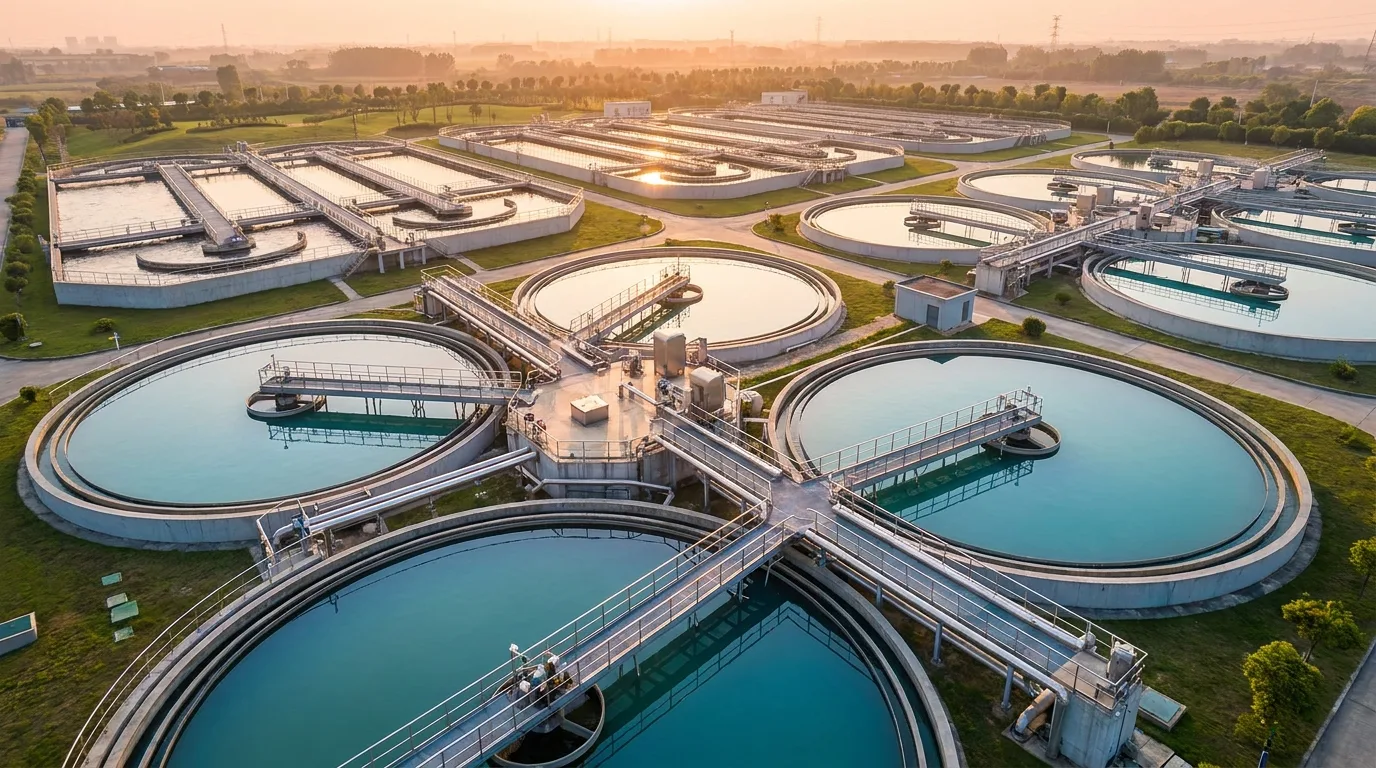
A municipal works serving a population of 110,000 wanted to cut its treatment energy and improve nutrient removal, without taking the works offline or pouring new concrete.
What we did
We improved the biology of the treatment process so the same load could be treated with less aeration energy, working with the plant already in the ground rather than replacing it.
The trial ran on the live works and was monitored by an independent consultancy against a benchmark, so the result could be trusted at full scale.
The result
Less energy, better removal, no new plant.
Biomass recovered quickly and settled better, and none of it required new infrastructure. These figures are from a four-week, benchmark-adjusted field trial, and a longer continuous trial is recommended to confirm them at steady state.
The trial was monitored by an independent environmental consultancy at a water-authority-operated municipal plant, the kind of near-independent, full-scale evidence a risk-averse water operator needs before adopting anything.
Why it matters
For a water operator under pressure on both energy cost and effluent quality, this shows aeration energy can fall while nutrient removal improves, on the assets already in the ground. It is the cost-and-obligation result the water and wastewater sector is built around.
Tell us your challenge
Tell us the cost, the risk or the obligation you are facing. A senior member of our team will respond, in confidence, with how we would help.